Florida’s latest animal abuse business is the Capybara Cafe


By Staci-lee Sherwood
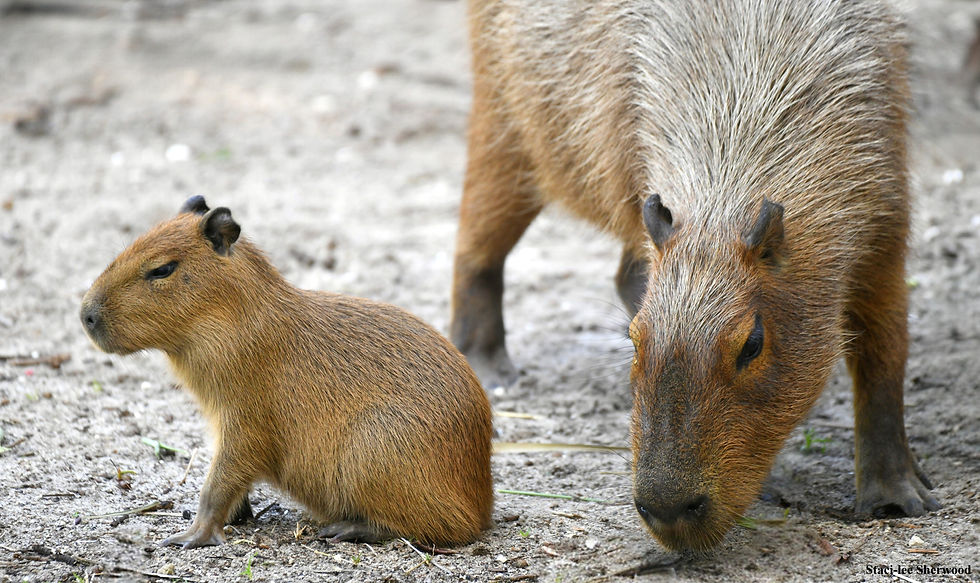
The Capybara is the world’s largest rodent. They live free in their native wild home throughout South America except for Chile. They have tiny ears compared to their large size and are adorable. They live in herds comprising of generational family members. Life in captivity deprives them of that. Animal cuteness often encourages exploitation because most people are far more likely to spend money to see and touch a cute animal over a less attractive one. The internet is filled with selfie sites of people with animals that once lived in the wild. Bad ideas seem to spread faster than good ones. Just because other people have opened these types of establishments doesn’t make it a legitimate business even with the excuse it funds a sanctuary.
They’re not native to the US or Florida and no one has them as pets. Just where did all these animals come from? Were they snatched from the wild because it’s almost impossible to see how they could all be rescues and since no one ever proves where they came from it’s logical they either came from the wild or a breeder of exotic animals. Neither of those is acceptable.
Capybaras are adorable but they’re native to South America and belong there as are part of the native ecosystem and important food source for the native predators that live there. They shouldn’t have to live in cafes or zoos.
Exploitation seems to be accepted as long as it isn’t our species. Why is that?
Did you know Florida is a haven for animal abuse? It doesn’t seem like there is any business exploiting animals that Florida will say no to from Dolphin swims to zoos, roadside attractions and now these Capybara cafes. The two biggest states for animal exploitation are Florida and Texas, though no state is all that great on animal welfare some are better than others. How well animals, wild or domestic, are protected depends on the educational level of its residents and how compassionate and proactive they are. Typically people don’t get involved until something affects then directly.
Education VS exploitation
How does the public differentiate between animal ambassadors of education for their species and exploitation? No one wants to think of themselves as exploiters or abusers but the road from good intentions to exploitation for money is not as long as one might think. Anything that involves a petting zoo, encounter or photo op is more exploitation. None of this exists in the wild where these wild exotic animals belong. Many are snatched from the wild. Others may be rescued from roadside zoos or former pets but a life spent in a building surrounded by people holding and petting them is not a real sanctuary. Below are two shining examples of real sanctuaries on a large scale that have been around for decades without a hint of controversy.
I will use the nonprofit Mission:Wolf as a prime example of a legitimate educational sanctuary. For years they were mostly known as having a big bus which traveled the country with their most famous ambassador Wolf Rami. I had the pleasure of meeting her and touching noses which was all her decision. Mission Wolf took the wolves best suited to educate people about what they were really like. They spent years discrediting the myths of Little Red Riding Hood and the big bad Wolf. At the home base in the mountains of Colorado the wolves roam free. They don’t live in cages there is no petting zoo of paid photo ops. Anyone visiting camps out in a tent with them and works to help the sanctuary survive. I attended several of their events when they traveled with their ambassador wolves and not only met the staff but the wolves. It was an amazing experience for everyone and did a great job educating people about wolves.
Mission: Wolf Ambassador Wolf Rami in New York in the 1990s. The wolves were kept on a leash during appearances for their protection from people. There was no hugging or selfies. The Ambassador Wolves traveled in a large motor home and were well cared for. They played a crucial role in securing legislation to protect them, which has since been stripped away and defunded.

Another good example is the nonprofit sanctuary Save the Chimps located in Florida. They are home to Chimps once used in lab experiments, circuses or as pets. The public can see them play and romp freely but at a distance for the well being of the animals. You can take wonderful photos but there is no petting. Ideally rescued animals should be released back into their native habitat. If that isn’t possible a life resembling what they would have in nature is best. I’ve been there more than once and it’s the best sanctuary I’ve seen.
Christmas time at Save the Chimps in 2024 where they get to open gifts of food and toys. There is no human contact with them; no kissing, hugging or selfies.

Compare that to this encounter with Otters. Hardly seems like this is for the animals benefit. In the wild Otters would never want to be handled by humans or kept out of the water for long. During encounters humans often pass on bacteria and other parasites to animals who would never encounter them naturally in the wild and have no natural defense against them. We humans can also get sick, so how is this safe or beneficial except as a money maker.

What’s in a name
A nonprofit called Noah’s Ark Sanctuary has opened 3 of these Capybara cafes. An interesting fact is the name is very similar to several other nonprofits using the same name that exist in other states from Georgia to Illinois and several others listed in Florida. I doubt this was an accident but instead by design. The owner/founder of the Capybara Cafes in Florida is also the founder of Noah’s Ark Sanctuary in Florida.
Confusion on purpose, here are several nonprofits with the same name but different missions just in Florida. A legitimate nonprofit has a website, lists their board members, staff and their 990 IRS tax returns. This is done to show they’re not frauds.
There is a Noahs Ark Of Central Florida Inc founded in 1998.
There is Noahs Ark-sanctuary For Abused And Abandoned Animals Inc listed in Palm City founded in 2002.
The sanctuary listed for the Capybara Cafes is Noah’s Ark Sanctuary but does not have a website but they do have a Facebook page. I couldn’t find their tax returns or listed board members.
https://www.facebook.com/profile.php?id=100093429233342&sk=directory_contact_info
When I looked up the ‘nonprofit’ on the Florida state website it shows Stephanie Angel’s name with this EIN number which is used for tax exempt nonprofits.

When I search the I.R.S. site for their tax returns using their EIN number and their name I got NO RESULTS. I can’t imagine why there is no record on any website for this nonprofit other than Facebook.

Shady history of the founder of the Florida Capybara Cafes
Stephanie Angel is the founder of the Capybara Cafes located in three cities in Florida. Originally from California, she and her partner, Joseph Martin got into legal trouble in 2018. As deputies with the Sacramento County Sheriff’s Department they were charged with elder abuse. The victim, Rosalie Achio, was 75 and said to have dementia so finding the truth appeared too difficult for charges to stick. Angel claimed she was doing what Achio requested which was to sell her house, empty her bank accounts and fly her alone to the Philippines. The family questioned her disappearance and after consulting with the F.B.I. officers flew to the Philippines to retrieve Achio and bring her back. Angel and Martin were fired in 2018 but no charges were pursued.
Click here to read about the bizarre case
In 2024 Angel and Martin started the Capybara Café in St. Augustine, another opened in Tampa and then in September 2026 a third opened in Ft Lauderdale. I spoke briefly to Angel who said she was planning to open one in Tennessee. I sent her text messages asking if she would be interested in talking because I wanted to see what she had to say about her questionable background, abuse allegations of animals and lack of information about her sanctuary. She replied with a text stating it had to be positive because she was getting bad press. The media at first gave her glowing free PR because they failed to do any research on her or her animals. As suspicion mounted disturbing things started to come to light.
On March 20, 2026 Joseph Dale Martin the Co-Owner of Noah’s Ark Sanctuary, The Capybara Cafe, and The Fluffy Cow Cafe, was arrested in St. Johns County for attempting to defraud a Palm Coast resident. According to the Flagler County Sheriff’s Department during an investigation by their General Assignment Unit, detectives determined that Martin attempted to defraud a resident by filing a fraudulent lien against his residential property on Ocean Crest Drive for $60,000 of work for water removal and remediation. Other incomplete projects included replacing the air conditioning unit; removing, purchasing, and painting new baseboards.
In 2021, Martin filed a lien against the victim’s property with the Flagler County Clerk’s Office in the amount of $110,880.00. The civil case ruled that Martin had grossly and willfully exaggerated which included work he did not perform. Detectives learned Martin falsely claimed to have completed installing new plumbing for the kitchen and bath. Martin was arrested for Grand Theft and Organized Scheme to Defraud. He was booked into the St. Johns County Jail and released on a $5,000 bond. “After a thorough investigation by our General Assignment Unit, our partners in St. Johns County were able to detain this thief,” said Sheriff Rick Staly. “We are committed to protecting our citizens against these types of fraud. If you have work done on your property, be sure to confirm you are hiring a licensed contractor.”Questionable behavior with people often leads to the same or worse with animals. According to PETA, Angel’s operations have been linked to several alleged violations including the following:
USDA citation for four young capybaras that died at Noah’s Ark Sanctuary without adequate veterinary care
St. Johns County citation for operating an unpermitted roadside zoo
Florida Fish and Wildlife Conservation Commission (FWC) charges for failing to report a lemur bite at one of her facilities, among other alleged violations
Stephanie Angel with a Wallaby at the café. Photo credit Fox news 8

After the opening of the latest café, public outcry quickly followed. First was the issue of wild animals in the art district which was a zoning violation. Then came the discovery of the animals, which were Capybaras and other animals, being transported twice a day from a private home in Ft Lauderdale. Then PETA sent a letter to Ft Lauderdale’s city attorney stating the café was operating without a valid business tax receipt and that it violated city zoning. They also noted documented animal health issues like respiratory illness in Capybaras and parasites in a Fennec Fox. Some parasites can be zoonotic meaning they can spread to humans and other animals.
The city issued an order to remove the animals which Angel has failed to comply with. She was seen carting the animals back and forth after October 7, 2026.

After Angel made it clear she wouldn’t comply or shut down PETA has taken action to file a lawsuit in Broward County Circuit Court against her and Ft Lauderdale. It seeks a court order that would bar the wild-animal petting operation from continuing to exhibit prohibited animals. The lawsuit follows PETA’s warning to the City that the facility is operating illegally.
Click here to read more
When I contacted Angel for an interview she complained about the bad press and said she would only talk if it was a fluff piece that showed them in a positive light. If I can’t find her tax returns and she has a questionable background why would anyone just write a glowing piece unless they’re too lazy to do research. She also said she needed approval beforehand. If you’re not guilty of a crime why be so insecure?

How you can help
The best way to help Capybaras is to not give money to those who exploit them. If you hear a sanctuary, nonprofit or a so called humane society allows encounters with them ask the following before going:
How does this benefit the animal?
How does this save the species?
Where did these animals come from?
What health care do they get?
Is their diet what they would eat in the wild?
Research the background of those involved.
Would I want this done to me if I were them?
If you wouldn’t want to live in a cage transported daily to a building to be handled by dozens of strangers why should they?


Comments