No safe place from developers even for protected species

Updated: Aug 17
By Staci-lee Sherwood
Tucked away in the middle of suburbia is a small but dense natural forest. Boynton Beach is heavily developed with both residential and commercial buildings, so having a forest in the middle of all this is a respite for anyone seeking quiet and peace close to home. It’s also one of the last remaining wild spaces in the area for wildlife. Florida is quickly tearing up every bit of grass for data centers and subdivisions.
The states unquenched hunger to pave over every blade of grass has shown its true colors to the public. As droughts become more frequent and severe one has to wonder where will all this drinking water come from to supply new buildings as aquifers dry up and what remains is contaminated by chemicals and dumping? The truth about the massive water usage, contamination from chemicals, increased traffic and noise has been hidden while few if any public hearings take place. This is how developers operate. Many present only half a plan then once approved they add on, or change entirely. This seems to be the case with developer Avi Stern of Mizner Global LLC and his bid to build in the ‘Boynton Beach/Niclols forest’.
In May 2025 the Boynton Beach City Commission voted to declare the property "surplus," allowing the city to enter into negotiations with him. The usual claims were made that environmental impact studies would be conducted, and wildlife like Gopher tortoises would be relocated. However I personally know that the common routine for FWC (Florida Fish Wildlife Commission) is to issue a take permit that lets you pave over or fill in the burrows leaving the animals to starve and die. I spent over 11 years working for FWC with endangered Sea Turtles and have documented them breaking their own policies and laws from manatees to burrowing owls. Don’t be fooled they will oversee anything or care what happens to the wildlife.
As is often the case permits are not applied for until someone checks to see the developer has in fact done their due diligence and followed all legally required procedures. On November 2, 2017 this particular developer, Avi Stern, was indicted on Felony charges of fraud relating to real estate in the U.S. District Court for the Southern District of Florida. How can anyone trust he’ll follow the requirements? My personal experience has proven that no one suddenly commits a crime in middle age, rather they have a long standing systemic history they were just lucky enough no one found out about. This might apply here as clear-cutting of the forest has already started before all the appropriate permits have been approved.
Click for more details
The ‘Boynton Beach forest’ is not surplus land but a thriving ecosystem
This 15 acre track of wild land isn’t officially a forest but it could be. It’s dense, thriving and home to many native species of plants, wildflowers and wildlife. It provides natural shade and cooling, especially important as the planet warms. It adds beauty to the neighborhood which increases property value. Market studies show people will pay more to live near a view of mountains, beaches or forests. No one calls track housing or townhomes a view a buyer would pay more for.
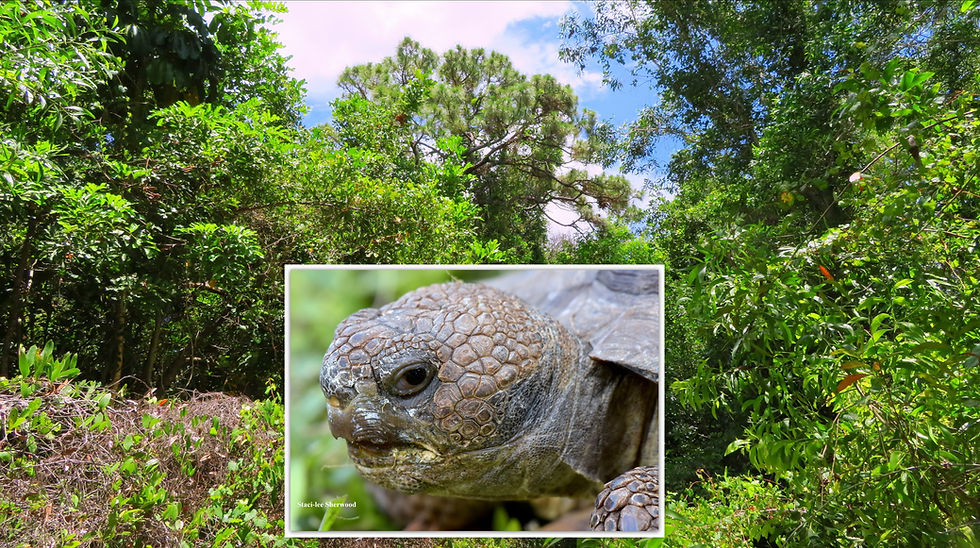
Those working hard to save this place affectionately call it the Boynton or Nickels forest. There are many protected Gopher Tortoises living there and making this into a preserve for them would be a great way to honor the meaning of protected species and habitat. There might even be another protected species living there, the Florida Bonneted Bat. Without a competent and thorough Environmental Assessment being done how would the county know what wildlife and habitat Mizner Global is killing?
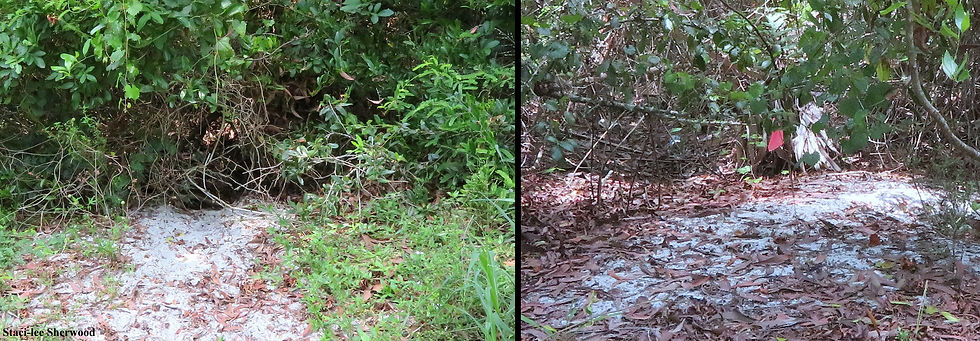
Hope that the land would be turned into a preserve for the many Gopher Tortoises that call this place home still remains. The surrounding community love the fact that wildlife can still be seen foraging near their homes. While I visited there a Gopher Tortoise crossed the street. He made his way into his burrow in the forest unaware it might be destroyed. Walking through the forest I saw several more marked burrows. In Florida this species is protected under Rule 68A-27 of the Florida Administrative Code. The Gopher Tortoise is considered a keystone species because their burrows are used by hundreds of other animals and insects. If we bury the tortoise to build homes we kill more than just the tortoise we collapse a whole living ecosystem. Imagine being in a burrow unaware that a developer wants your home and bought a ‘take’ permit from FWC to bury you alive.
One of the protected Gopher Tortoises living there

I saw several burrows on the property
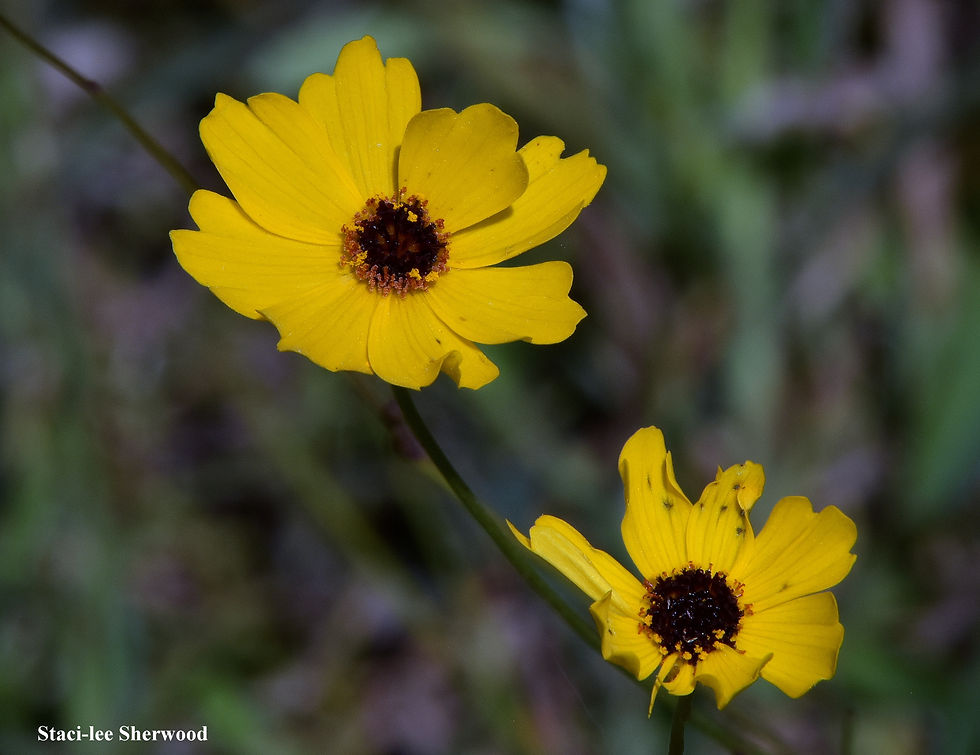
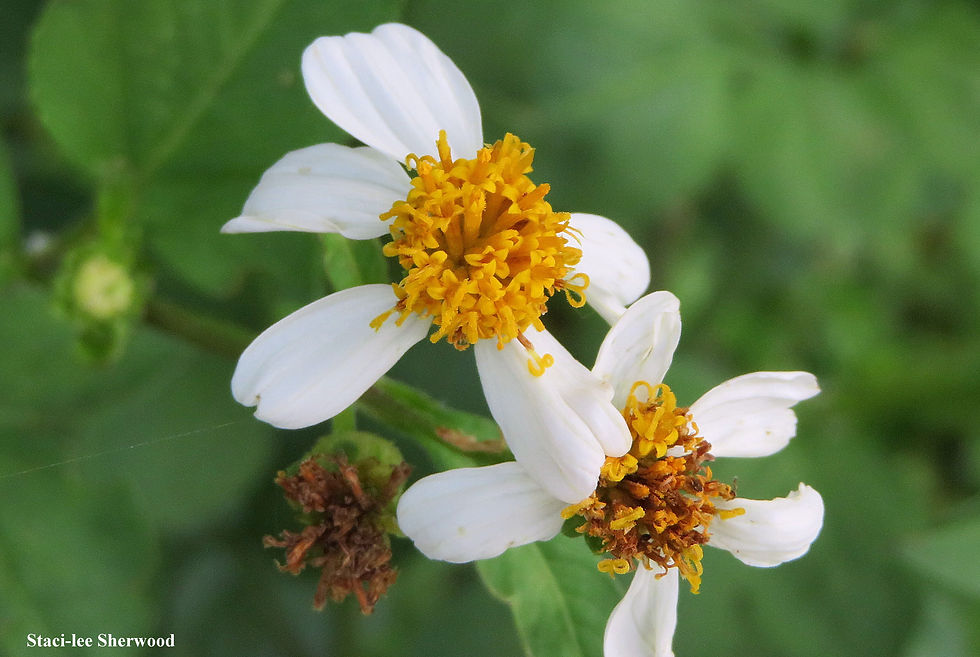
I met with Susan Oyer, a dedicated resident who’s been working hard trying to save this forest. She’s spent several years fighting the city and county who seem hell bent of selling while educating the local community about new threats and how development would impact their neighbor. We walked through the forest and saw many species of native wildflowers. I counted Fogfruit, Florida Tickseed , Paintedleaf and Spanish Needle among the thriving ecosystem. All notably important food sources for the many butterflies seen here including the state butterfly Zebra Longwing. We are losing native wildflowers faster than we can document. They’re important to a healthy ecosystem which we benefit from as well. We should be protecting land that is still healthy enough for them to grow. So many tracks of land in Florida have been contaminated with heavy metals and pesticides and are now dead zones.
Fogruit is a hardy native groundcover

Florida Tickseed
Paintedleaf

Spanish Needle a favorite of many butterflies, beetles and other important insects
The Gulf Fritillary buttery
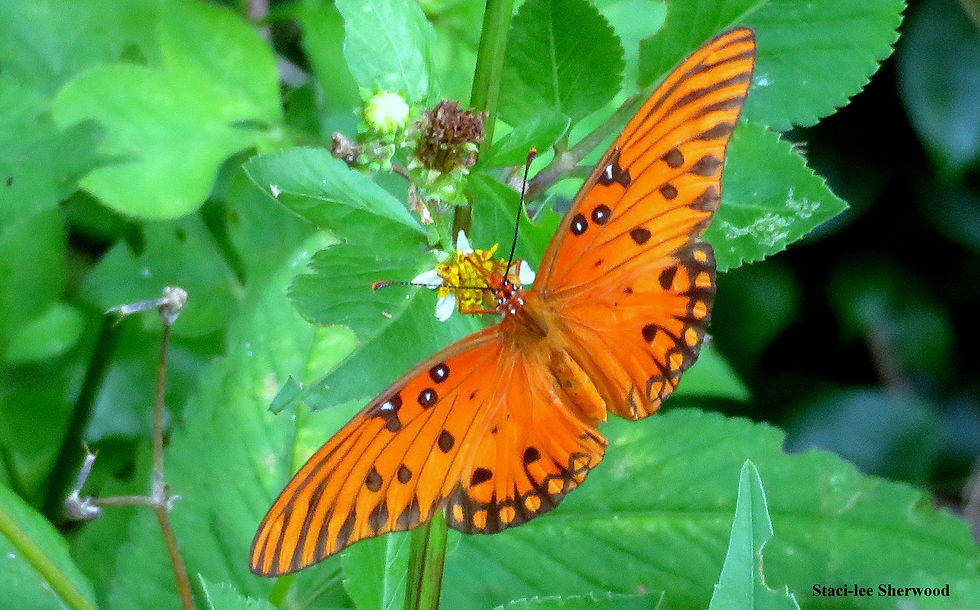
Florida State butterfly the Zebra Longwing

I saw several native plants growing there including the Longleaf Pine. The once expansive Longleaf Pine ecosystem is considered one of the most endangered in North America. With over 30 federally threatened or endangered species dependent on this specialized habitat in Florida we shouldn’t be cutting them down. So how can a developer destroy these trees?
Longleaf Pine a favorite nesting tree for Swallow-tailed kites

Saw palmetto is exceedingly important to the fire ecology of Florida. As of July 2018, the Florida Department of Agriculture and Consumer Services (FDACS) requires a permit to harvest and sell saw palmetto berries in Florida. The Endangered Plant Advisory Council unanimously recommended adding saw palmetto to the FDACS commercially exploited plant list. We know this tree grows here so why is a developer allowed to cut them down?
Wild native Saw Palmetto that should be protected not destroyed

The Sabal Palmetto, also called the Cabbage Palm, does have some legal protection. Many cities and counties in Florida have tree preservation ordinances that require a specific tree removal permit. The city of Boynton Beach and Palm Beach County both require permits. You can’t legally harvest or remove these trees on public lands without a permit. In Palm Beach County there are laws that all developers must adhere to. Article 7 and Article 14 of the Palm Beach County Unified Land Development Code (ULDC) regulate property aesthetics, environmental preservation, and natural resource protection. These laws are designed to ensure that development in unincorporated Palm Beach County maintains community appearance, conserves water, and protects sensitive ecosystems.
Click here for the full Article 7 - Landscaping
Click here for the full Article 14 - Environmental Standards
Sabal Palmetto/Cabbage Palm

No regard for life as these native trees are cut and damaged by the developer as seen on May 1, 2026. This is evidence developer Avi Stern has been cutting down protected native trees without a permit and that violates the law. This demonstrates a lack of honesty on the part of the developer as anyone doing business for many years absolutely knows the laws and permitting process. This clear cutting under Article 7 - Landscaping clearly defines what can and cannot be done:
3.C EXISTING NATIVE VEGETATION – PRESERVATION This Title of the Technical Manual corresponds to ULDC Article (Art.) 7.E, Existing Native Vegetation, Prohibited, and Controlled Plant Species, and ULDC Art. 14.C.7.C, Development of Other Uses and Improvements. For the purpose of this Title, trees, palms, pines, or any types of vegetation that are subject to preservation, mitigation, relocation on site, relocation off site, and removal are referred to as Vegetation. The Applicant is required to review the Environmental Resources Management (ERM) Department’s Best Management Practices (see above link) and ULDC Art. 14.C, Vegetation Preservation and Protection for applicable requirements or guidelines. [8/2023]

How you can help save the forest
If you want to help save this forest there is still time. Not all permits have been approved and ground has not been broken. The most important thing, especially if you live in the immediate area, is call/email Palm Beach County Commission and tell them NO development (ref: CA-2025-01327 Turtle Square). Contact the Palm Beach County Commissioners (addresses below) and ask they NOT go through with this development. However, the following should also be on record. The county must hold the developer Avi Stern (Mizner Global LLC) to the county’s own standards and before any ground breaking several things must be required:
State must DENY permits to kill wildlife (Gopher Tortoise ‘take’ permit)
Demand developer stop his clear cutting of the forest
Turtle Square should not be certified or approved until the applicant proves safe/legal access
Environmental compliance
Drainage protection
Traffic safety
NO change should be made to allow for 72 townhomes
Compatibility with the surrounding single-family neighborhoods
Contact info -
*And contact Palm Beach County Commissioners individually
Maria G. Marino – MMarino@pbc.gov
Gregg K. Weiss – GWeiss@pbc.gov
Joel G. Flores – JGFlores@pbc.gov
Marci Woodward – MWoodward@pbc.gov
Maria Sachs **– MSachs@pbc.gov (her husband Peter Sachs is a condo/real estate lawyer also from Boca Raton whose law firm represents developer Avi Stern/Mizner Global LLC)
Sara Baxter – SBaxter@pbc.gov
Bobby Powell Jr. – BPowell@pbc.gov
Attend and speak at the Palm Beach County Commission meeting in West Palm Beach on June 17, 2026 when they will be voting on this project. If you don’t stand up for your rights no one else will.
Follow this page for timely important updates and contact info
https://www.facebook.com/profile.php?id=61576820421289
For further information send an email to saveboyntonsforest@gmail.com
Also published on The Good Men Project on August 17, 2026


Excellent article. Wildlife protections mean little without habitat. Protecting Florida’s unique species means protecting the account ability they depend on. Thanks for highlighting this issue. F.W.C. has no oversight and really no accountability. They will take photos of minor fish catch violations and try to convey they are protecting the environment. In reality, they have been poisoning the Florida waterways and allow hunts to generate revenues at the expense of losing our Florida species.