The problem with invasive species

By Staci-lee Sherwood
There’s a difference between a species that is non-native and invasive. A non-native species could have been introduced by people or brought here by nature (storms, wind) and co-exists with native species without competing with them for food or killing them. Many non-native species live without causing native species population to decline to unsustainable levels. Invasive species are a real threat. It’s tough enough for any species to find food, a mate and safe place to raise young without having to fight off invasive species trying to kill them and steal their food.
Why it’s a terrible idea to introduce non-natives
The ecosystem is designed to provide the needed food and habitat for the native species that live there. When non-native species show up the balance in nature is thrown off. Often times the invasive species are larger or more aggressive making the competition deadly. When humans introduce a no-native species to an ecosystem as a way of combating another species it rarely works. The case of the Cane Toad for sugar crops and Common Myna for worms is proof what a failure these projects were. Once introduced many non-natives quickly hijack the habitat and spread. Once released, they can never be recaptured.
Invasive European Starlings & Common Mynas
The European Starlings first appeared in the U.S. on March 6, 1890 when a wealthy socialite named Eugene Schieffelin released one hundred of them in Central Park in New York City. The release was part of his eccentric effort to introduce all the birds mentioned in Shakespeare's works into the U.S. These birds have fascinated bird lovers for decades because of their unique flying behavior. They congregate in huge flocks and fly in synchronized formations call murmurations. While other birds fly in flocks and often have synchronized behavior too, the Starlings are unique in their flock size and their intricate dance in the sky. They sing a beautiful song and have a sweet face but have a dark side too. They’re very aggressive and often kill other cavity nesting birds to steal their homes.
Starlings don’t make their own nest, they steal them from woodpeckers, bluebirds and nuthatches. They’re known to kill adults, chicks and eggs during breeding season. Native birds fight an uphill battle every day just finding food, water and a safe home to make a nest and raise their young. They’re plenty of native predators. Non native predators just add to the list of things that cause a decline in a species.
I watched a dedicated pair of Downy Woodpeckers battle Starlings threatening their nest and chicks. After more than a week the Downy Woodpeckers won but that is not often the case. This pair also battled a determined Red-bellied Woodpecker who, despite being a native species, was just as much a threat. This season the Downy Woodpeckers successfully fledged two healthy chicks but next year could be a different story. Starlings don’t just threaten other birds for their tree cavity homes they also compete for food. The energy this pair expended with daily fights with Starlings takes a toll on their ability to forage for themselves and their chicks. It’s a deadly domino effect.
A pair of Downy Woodpeckers checking their newly hatched chicks

Same pair fending off Starlings with two young chicks in the nest

Video of the male Downy Woodpecker fighting the male Starling, nest hole is bottom left of screen . Click arrow to play
The male feeds a hungry chick just before fledging

Both male (pictured) and female European Starlings can be equally aggressive toward a cavity nesting bird. Larger than the Downy Woodpecker, Eastern Bluebird and Nuthatches they will also take on larger birds like the Northern Flicker and Blue-crowned Parakeets.

A female Red-bellied Woodpecker eats a seed. This species can be both predator, to other cavity nesting birds and victim of the European Starlings

A male Eastern Bluebird may be gorgeous but he can’t fend off aggressive birds wanting his nest

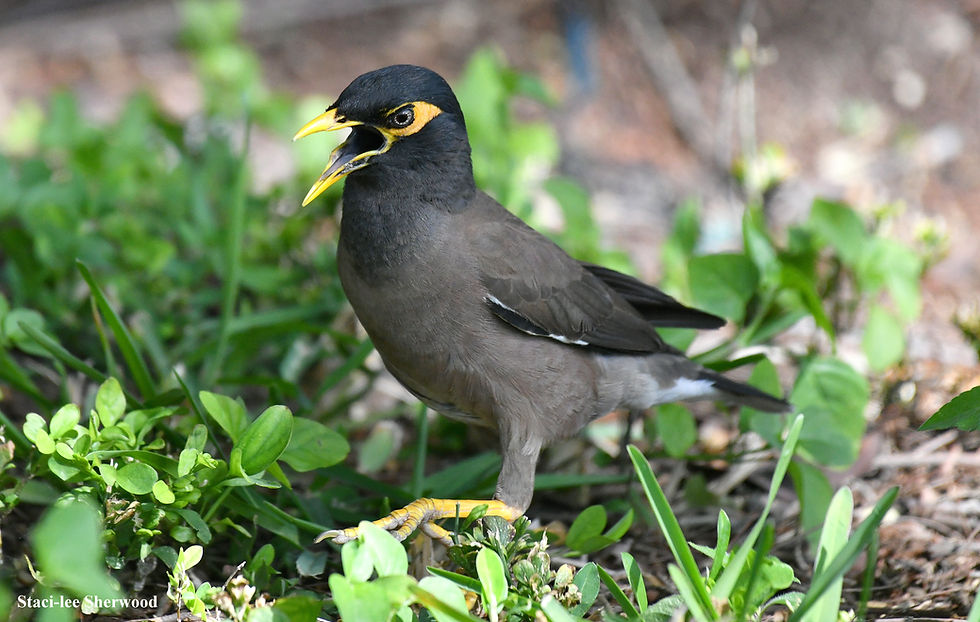
In 1865 Dr. William Hillebrand introduced the Common Myna, native to India, in Honolulu Hawaii to combat army worms and cutworm moths. By 1879, they were already considered abundant. It’s thought some escaped pets back in the 1980s established a population in southern Florida. The IUCN (International Union for Conservation of Nature) has them listed as one of the world's 100 worst invasive alien species. These aggressive birds compete with native birds for food and like the Starlings will kill eggs, chicks and adults to steal their nest cavity. They’re also a carrier for Avian Malaria which can kill native birds.
Exotic looking but often deadly to native birds

Cane Toads & Cuban Tree frogs
The Cane Toad is not only invasive but can be deadly to cats and dogs that come in contact with them. They compete with native toads for food. Found in Central and South America they were brought here in the 1930s to combat sugar cane pests and have since expanded their range to a point where they are impossible to control. They look almost identical to the native Southern Toad, which is often killed by mistake.
An invasive Cane Toad. They are often found in gardens so if you let your pets out it’s best to make sure you don’t have one lurking in your potted plants or under shrubs. They can be highly poisonous to cats and dogs

The Cuban Tree Frog is another invasive species from Cuba and the Caribbean. They came here as hitchhikers on cargo ships and in plants for gardens in the 1920s. Since then they’ve expanded their range throughout Florida. They compete for food and space with native tree frogs. They’re known to eat our five native tree frogs including the Squirrel Tree Frog. Being much larger in size the native species are easy prey.
This invasive Cuban Tree Frog may look like he’s a sweet frog napping but in reality they prey on native smaller tree frogs. The large rounded pads is how you identify they’re non-native.

A tiny native Squirrel Tree frog who’s barley 2” in length can’t compete with a hungry much larger invasive Cane Toad.

Invasive Brown Anole vs Green Anole
This small but abundant lizard made their way to Florida as many other invasive reptiles have, on cargo ships back in the 1800s. from Cuba and the Caribbean. They quickly overpopulated and expanded their range. They compete for food being more aggressive than native Green Anoles, a rare sight to see now. The Brown Anole will eat both the hatchlings and adults and even consume their own being cannibalistic at times.
The invasive Brown Anole shows off his strawberry looking dewlap.

A native Green Anole shows his pink dewlap, This is shown to both attract mates and ward off rivals.

What can be done?
Many invasive species end up released into the wild by reckless pet owners, think of the Burmese Python in the Everglades. Thanks to a mostly unregulated pet trade and the black market for exotic pets this is an ongoing crisis. Consumers can help curb this problem by not buying exotic animals and especially not releasing them into the wild. If you live near farms and ranches be aware of any proposals for introducing any species as a way to combat ‘pests’. It will likely end up a failure like the Cane Toads, causing more damage than the perceived damage they were brought in to fix. Nature had its own way of keeping species in check, only we humans messed that up. Lets’ not add to the problem.


Comments